Native Rain Garden Plants: What to Plant in Each Moisture Zone
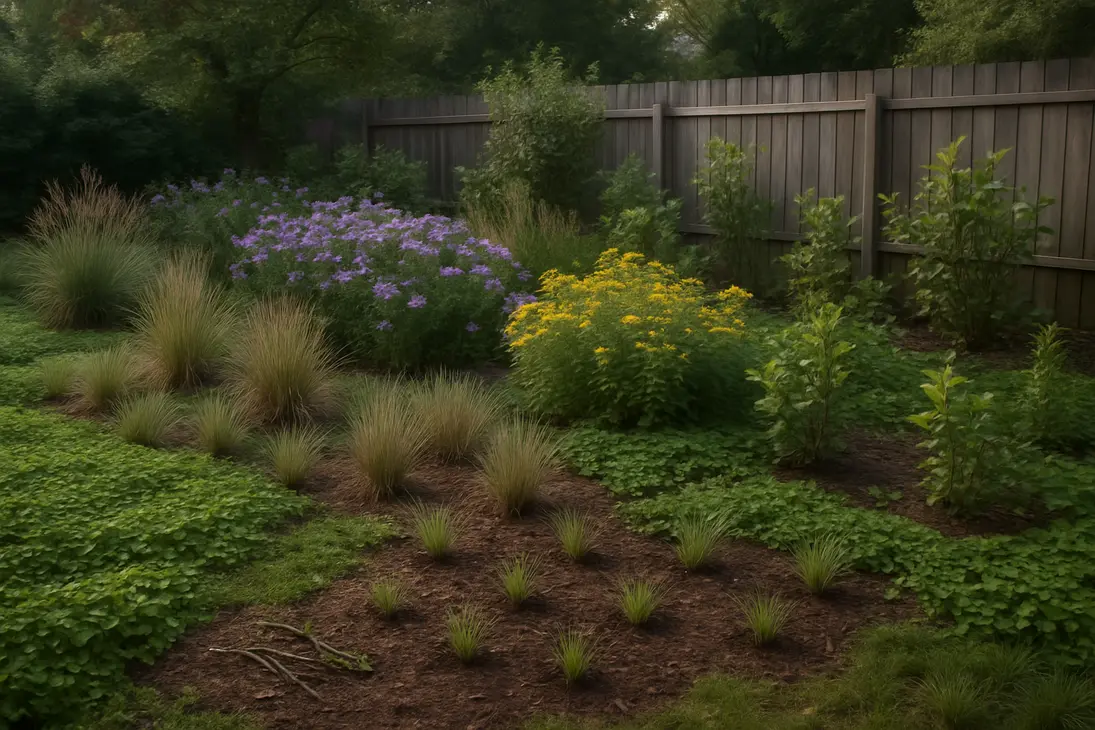
Choosing plants for a rain garden requires matching species to your local native range, to a specific hydrologic zone within the garden, and to the flood and dry periods that zone experiences. A rain garden contains distinct zones—basin bottom, lower and middle slopes, upper slope and rim, inlet, and overflow—each with a different moisture regime. Light conditions also vary. Confirm a species is native to your ecoregion first, then match it to the correct hydrologic zone, then check flood tolerance, dry-period recovery, sun, soil, mature size, and maintenance needs. A normal rain garden drains between storms; plants cannot fix a permanently wet basin caused by incorrect design. If water remains beyond the local drawdown standard, correct the water problem first. Native plants still require watering and weeding during establishment, some spread aggressively, and the community changes over time.
Key Takeaways
- Select plants by hydrologic zone, not hardiness zone alone: Match each species to the basin bottom, slopes, rim, inlet, or overflow based on how long that zone stays wet and how quickly it drains.
- Verify local native status for every species: “Native to the United States” does not mean native to your county or ecoregion. Check scientific names against state flora, Extension resources, or native plant society records.
- Build a layered plant community around a stable matrix: Use sedges, rushes, and low-growing perennials as the base layer, then add seasonal flowering forbs and limited shrubs. Repeat species in groups to prevent bare soil and weed pressure.
- Expect an awkward establishment phase that requires active management: The first two growing seasons demand watering, weeding, and storm inspection. The garden progresses through root establishment, canopy closure, competition, and long-term rebalancing stages.
- Diagnose plant problems by location and pattern first: Failure in the bottom, slope, rim, or roadside position has different likely causes. Check hydrology, salt exposure, spacing, and species fit before replacing plants.
Choose Native Rain Garden Plants by Hydrology, Not USDA Zone Alone
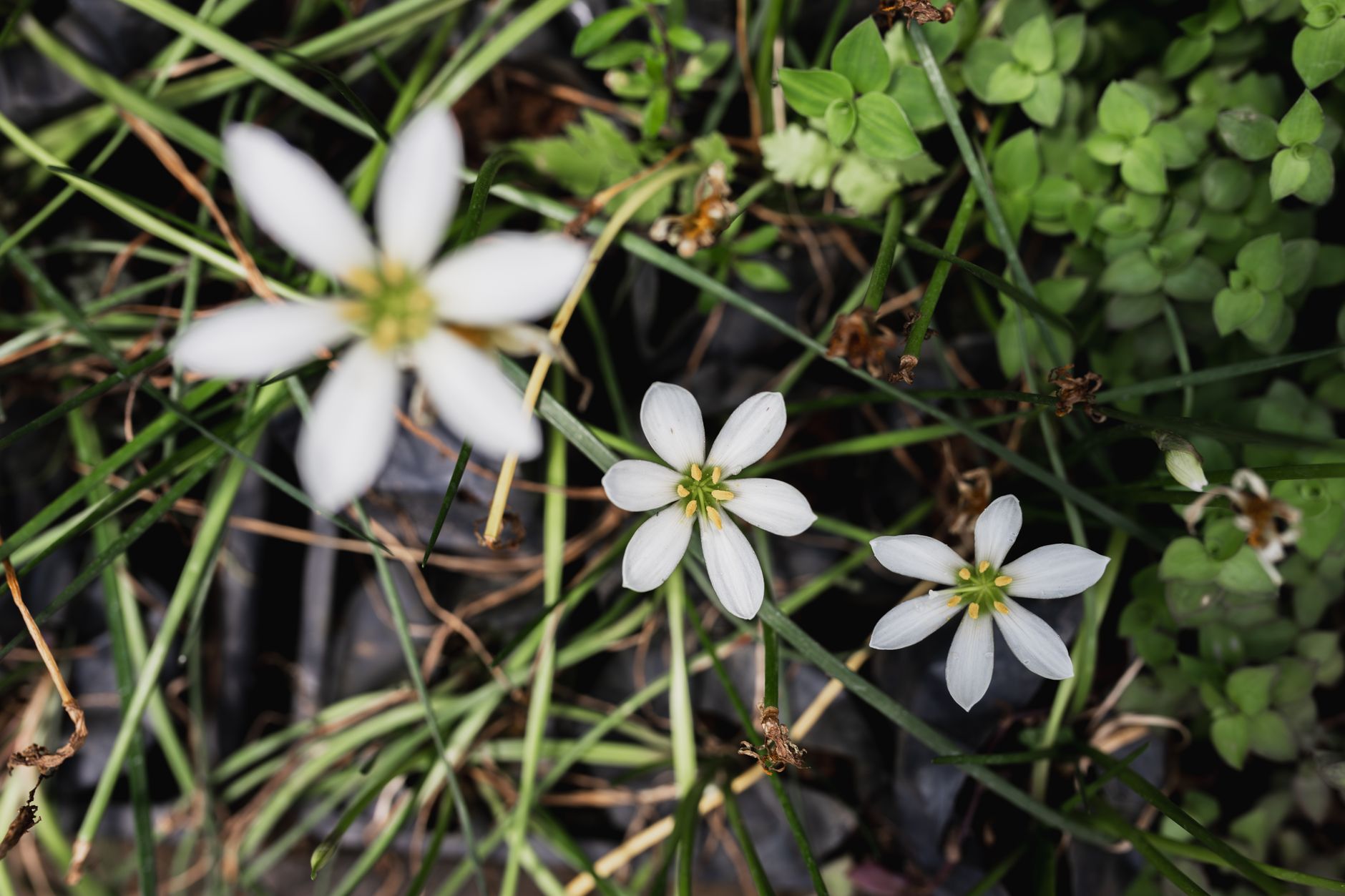
A plant can be winter-hardy in your zone but hydrologically unsuitable for the position you place it in. Assess your rain garden after actual storms: record which areas flood first, maximum water depth, which areas drain first, how long each zone stays wet, where sediment accumulates, and where light conditions vary. Apply these selection filters to every candidate plant: local native range, hydrologic zone, inundation duration, dry-period tolerance, light, soil and pH, runoff source (roof, lawn, road, or parking lot), mature size, spreading habit, seasonal behavior, and local safety/regulation. Verify each filter using state flora, Extension resources, native plant society records, and on-site observation.
Define “Native” at the Local Level
Native status exists at multiple scales: continental, national, regional, state, county, ecoregion, and watershed. Give highest priority to species native to your ecoregion, state, and a comparable local habitat (wet meadow, floodplain, riparian area, or prairie). Verify scientific name and documented native range for every species. Nursery labels that say “Native” or “Wildflower” do not establish local native status. For example, Carex pendula is sometimes falsely promoted as a U.S. native; its native range is European–Mediterranean and it is a noxious weed in Washington state. Never assume a plant is ecologically interchangeable across its entire North American range.
Map the Bottom, Slopes, Rim, Inlet, and Overflow
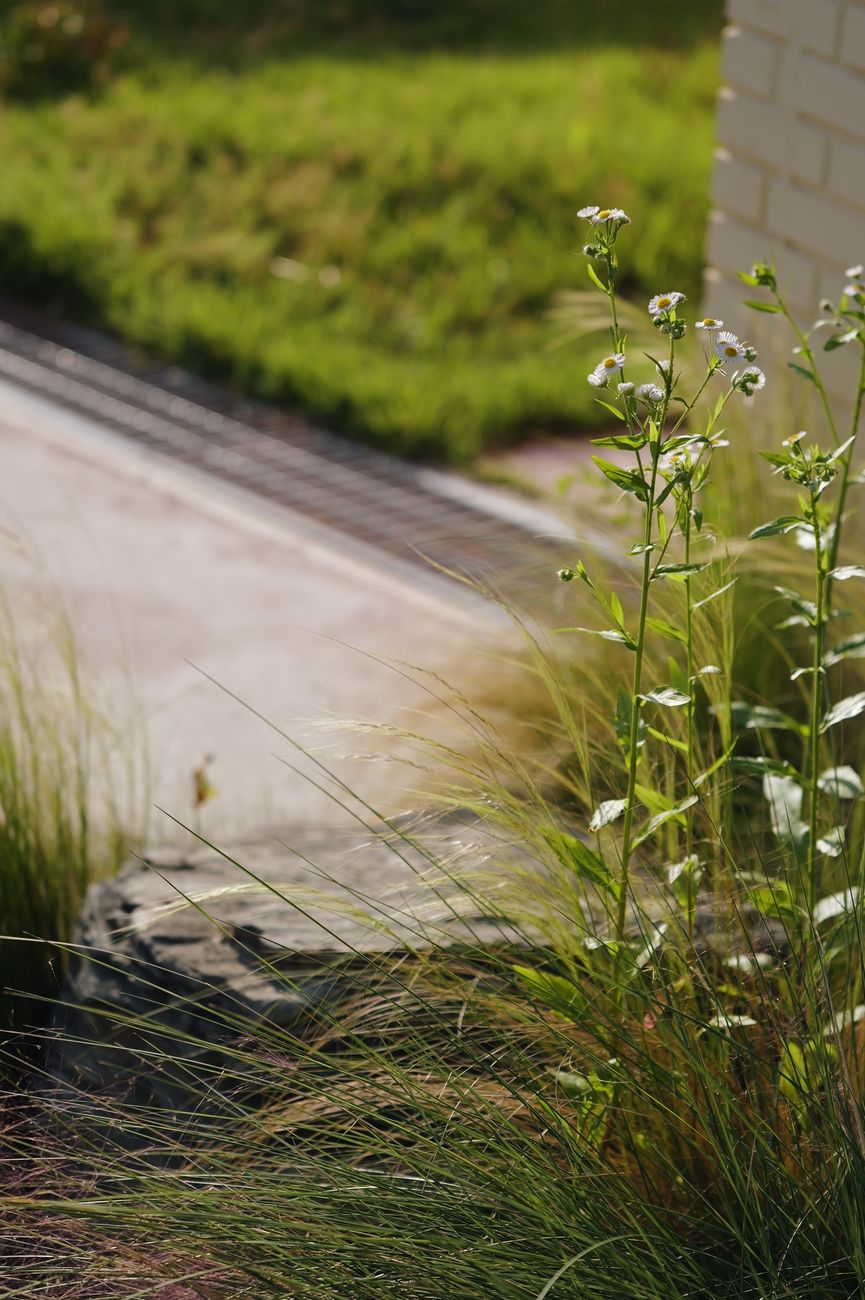
The basin bottom floods most often and drains last, but may become dry between storms. Bottom plants must tolerate both temporary inundation and summer dryness. Lower and middle slopes experience shorter inundation and need roots that stabilize soil; this zone often has the broadest wet–dry range. The upper slope and rim remain dry most of the time and need plants that tolerate occasional saturation. The inlet receives strong flow, accumulates sediment, and may receive salt or contaminants; inlet plants must be sturdy and the area kept accessible. The overflow experiences occasional concentrated flow and must not be blocked. Observe the basin after several storms before finalizing plant layout.
Match Flood Duration With Dry-Period Recovery
There is a meaningful difference between consistently saturated habitat, one-day flood, several days of inundation, moist soil, and rapidly draining slope. Some wetland plants decline when the basin dries; some adaptable perennials tolerate one-day flooding but stress after longer inundation; some drought-tolerant rim plants rot in the bottom. Assess growth, flowering, crown health, and long-term coverage, not just survival. Do not use “water-loving” as the only placement instruction.
Add Sun, Soil, Salt, and Runoff Source
Two rain gardens in the same region may require different plant communities. Evaluate every hydrologic zone separately for sun exposure. Match plants to soil pH, texture, drainage, and organic matter. Roof runoff creates different stresses from road runoff; roadside gardens need stronger salt tolerance, splash tolerance, and freeze–thaw tolerance. Do not copy a residential downspout plant list into a roadside installation.
Check Mature Size, Spread, Dormancy, and Safety
Mature height can block sightlines, inlets, and overflows; mature width can overcrowd narrow basins. Spreading habit (clumping, rhizomatous, stoloniferous, self-seeding, suckering) matters greatly. Some plants emerge late, go dormant in summer, flop after heavy rain, or are short-lived. Spring ephemerals need later-emerging companions. Also check for toxicity, thorns, local invasive status, and quarantine restrictions before planting.
Build a Plant Community, Not a Collection of Individual Favorites
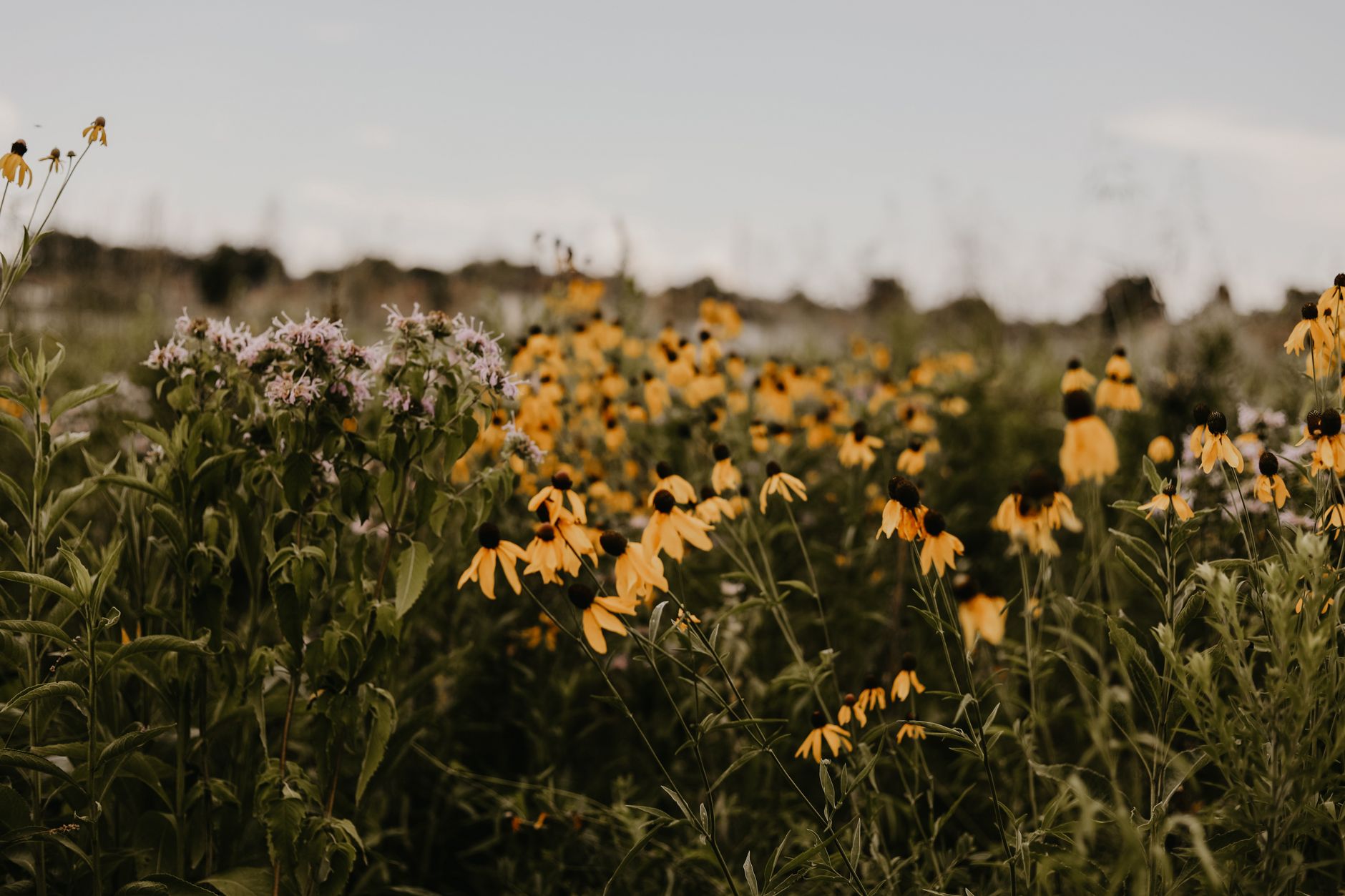
Planting isolated specimens often leads to bare soil, high weed pressure, and unbalanced competition. Build around a stable matrix of sedges, rushes, grasses, and low-growing perennials, with repeating groups of flowering forbs and limited shrubs. Keep functional infrastructure (inlet, overflow, sediment area) visible and accessible.
Use Wet–Dry Workhorses in the Basin Bottom
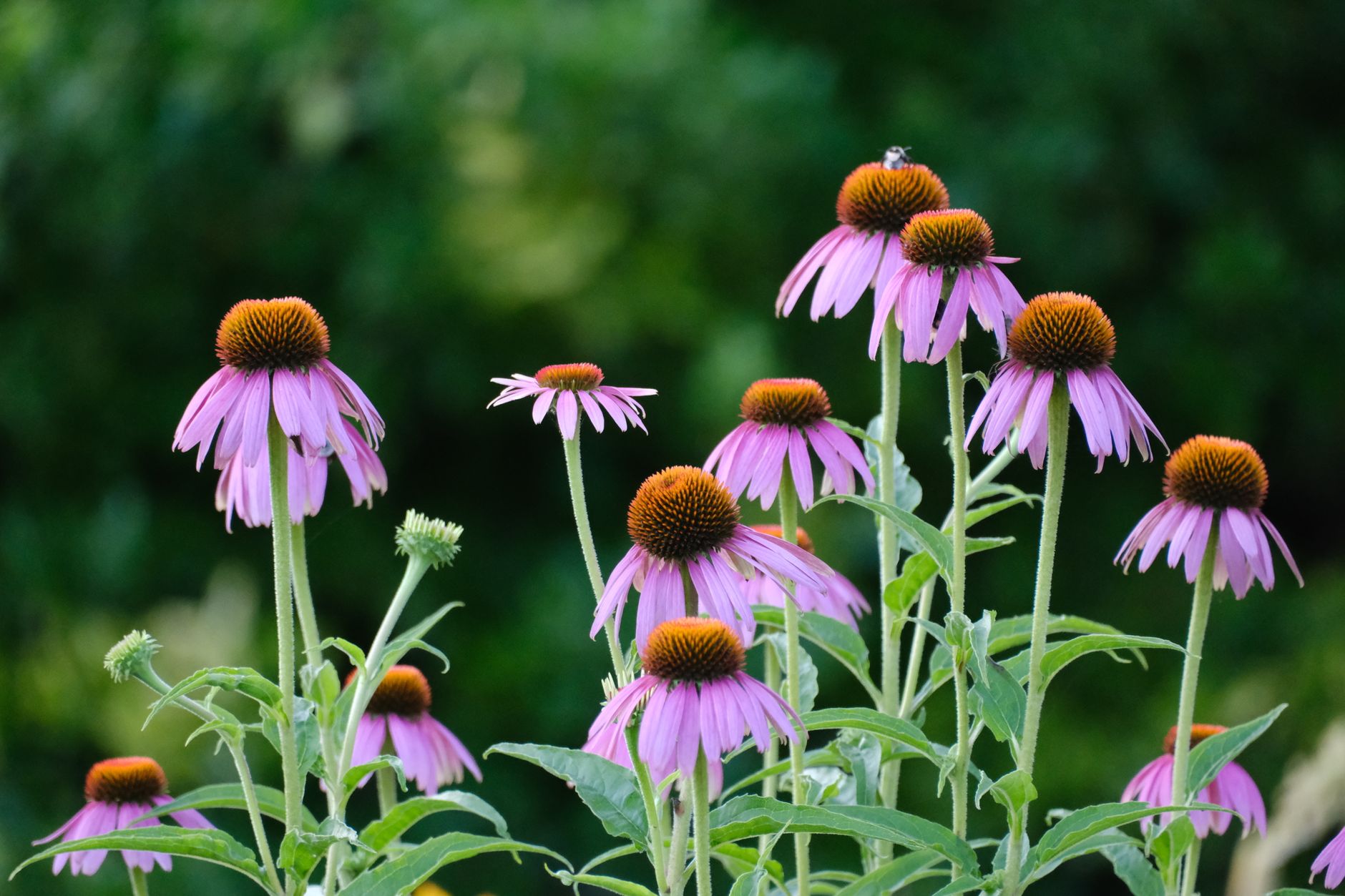
The bottom zone needs plants that tolerate temporary flooding, saturated soil, recovery after drainage, and periodic summer dryness. Good candidates are sedges, rushes, moisture-adapted grasses, and flood-tolerant flowering perennials. Do not use constantly wet species unless your basin remains moist between storms. Do not place dry-prairie coneflowers or butterfly weed in the lowest zone.
Stabilize the Slopes With a Dense Matrix
The lower and middle slopes are the main transition zone. Choose plants that tolerate periodic wetness, recover through dry periods, form dense root systems, and hold soil on slopes. Appropriate local sedges, grasses, and low clumping perennials work as matrix plants. Interplant taller flowering species in repeated groups. Account for water movement, mulch movement, and erosion near the inlet.
Use the Rim for Drier Native Structure
The upper edge is usually a dry native garden with occasional storm exposure. Select locally native plants that tolerate mostly dry soil, brief saturation, reflected heat, and wind. Drought-tolerant grasses, dry-prairie perennials, compact shrubs, and groundcovers work well. Keep plants clear of the overflow opening, paths, and utility access.
Combine Matrix Plants, Seasonal Flowers, and Limited Shrubs
The matrix layer (sedges, rushes, grasses, low perennials) holds soil and suppresses weeds. The seasonal flowering layer includes spring, early summer, late summer, and fall bloomers. Structural layer includes compact shrubs where basin size permits. Wildlife value improves with flowering richness and native diversity. Do not add shrubs where roots conflict with infrastructure or mature size exceeds the basin.
Native Rain Garden Plant Examples by U.S. Region
The species listed below are examples only. Every plant must be verified against local native range, hydrologic position, sun, soil, and runoff source before planting. County-level or ecoregion-level verification is required.
Northeast and Mid-Atlantic Examples
Possible bottom or moist-zone examples: swamp milkweed (Asclepias incarnata), blue flag iris (Iris versicolor), cardinal flower (Lobelia cardinalis), fox sedge (Carex vulpinoidea), tussock sedge (Carex stricta).
Possible slope and rim examples: golden Alexanders (Zizia aurea), foxglove beardtongue (Penstemon digitalis), wild bergamot (Monarda fistulosa), switchgrass (Panicum virgatum), butterfly weed (Asclepias tuberosa).
Possible shrubs for larger gardens: black chokeberry (Aronia melanocarpa), winterberry (Ilex verticillata), buttonbush (Cephalanthus occidentalis).
Butterfly weed and many coneflowers belong in dry or rapidly draining positions, not the basin bottom.
Great Lakes, Midwest, and Great Plains Examples
Possible bottom or moist-zone examples: tussock sedge (Carex stricta), fox sedge (Carex vulpinoidea), blue vervain (Verbena hastata), swamp milkweed (Asclepias incarnata), blue flag iris (Iris versicolor), soft rush (Juncus effusus).
Possible transition and rim examples: prairie blazing star (Liatris pycnostachya), dense blazing star (Liatris spicata), golden Alexanders (Zizia aurea), little bluestem (Schizachyrium scoparium), butterfly weed (Asclepias tuberosa).
Possible larger structural plants: buttonbush (Cephalanthus occidentalis), red-osier dogwood (Cornus sericea), switchgrass (Panicum virgatum).
Michigan recommendations still need county-level checks for lake-effect climate, soil, sun, and road salt.
Southeast and Gulf Coast Examples
Possible moist or bottom-zone examples: soft rush (Juncus effusus), cardinal flower (Lobelia cardinalis), swamp sunflower (Helianthus angustifolius), swamp milkweed (Asclepias incarnata), buttonbush (Cephalanthus occidentalis).
Possible slope, rim, and shrub examples: Virginia sweetspire (Itea virginica), inkberry (Ilex glabra), pink muhly grass (Muhlenbergia capillaris), switchgrass (Panicum virgatum).
Separate mountain, Piedmont, Coastal Plain, peninsular Florida, and Gulf Coast conditions. Avoid importing northern marsh species into hot, rapidly drying gardens without regional evidence.
Pacific Northwest Examples
Possible wet or moist-zone examples: slough sedge (Carex obnupta), common rush (Juncus spp.), tufted hairgrass (Deschampsia cespitosa), Douglas spirea (Spiraea douglasii), Pacific ninebark (Physocarpus capitatus).
Possible transition and upper-zone examples: common camas (Camassia quamash), western bleeding heart (Dicentra formosa), sword fern (Polystichum munitum), red-osier dogwood (Cornus sericea).
Do not use Carex pendula as a native substitute. Western Washington, coastal Oregon, eastern Oregon, and inland Washington require different plant lists.
Dry West, Southwest, California, and Mountain Examples
Start with local-list-first: use your county Extension office, native plant society, watershed district, and state flora. Examples to investigate locally include California gray rush (Juncus patens), deergrass (Muhlenbergia rigens), alkali sacaton (Sporobolus airoides), yerba mansa (Anemopsis californica), and regional willows only where space permits. Western rain gardens often need plants adapted to short, high-intensity flooding followed by months of drought, alkaline soil, and high heat. Do not recommend eastern species merely because they share the same USDA Zone.
Establish, Maintain, and Rebalance the Plant Community
Successful rain-garden planting depends on realistic management stages: root establishment and exposed soil, canopy closure, competition and plant movement, and long-term rebalancing. The first two growing seasons generally require the most active care.
Choose Plugs, Pots, or Seed Mixes According to the Goal
Plugs provide known species and predictable placement. Larger pots give immediate visual structure but cost more. Seed mixes cost less but require complete botanical-name disclosure; they may contain nonnative plants or species unsuited to hydrologic zones, and they are harder to place precisely. Do not recommend a generic wildflower mix as a complete rain-garden planting plan.
Plant Densely Enough to Reduce Long-Term Bare Soil
Base spacing on mature spread, growth rate, and garden scale. Use repeated groups rather than isolated specimens. Dense spacing closes the canopy sooner. Very aggressive spreaders should not be planted at the same density as slow clumpers. Keep access clear to the inlet, overflow, and underdrain cleanout.
Treat the First Two Growing Seasons as Establishment
Water during dry periods, inspect every few weeks, remove weeds before they seed. Replace plants that repeatedly fail only after diagnosing the cause (wrong hydrologic zone, shade, drought, excessive flooding, salt, herbivory, or sediment burial). Inspect after storms for uprooted plants, erosion, and blocked structures. Avoid annual fertilizer unless a documented deficiency exists.
Read the “Awkward Phase” by Milestones, Not Fixed Years
Progress is better measured by observable milestones than years. Stage one: root establishment, visible gaps, high weed pressure. Stage two: canopy closure, declining bare soil, early failures become obvious. Stage three: competition and movement, rhizomatous plants expand, thinning may be needed. Stage four: long-term rebalancing, some species dominate, some disappear, the original plan may need revision. Do not promise a mature appearance by a specific anniversary.
Manage Spreaders and Volunteers by Species, Not Reputation
Classify plants by movement mechanism before planting. Decide where a colony is acceptable, which species require edging, and which seed heads to remove. Spreaders can be useful for erosion control but may become unsuitable in small basins. Remove noxious and invasive species promptly.
Use Mulch Carefully and Keep Water-Flow Structures Open
During establishment, use locally recommended mulch away from plant crowns. After canopy closure, reduce repeated mulch applications. Keep the inlet, sediment forebay, overflow, and drainage structures clear. Do not use mulch to conceal a planting-density or erosion problem.
Troubleshoot Plant Failure, Overgrowth, and Seasonal Gaps
Diagnose problems by location and pattern before buying replacements. If bottom plants die after dry weather, check dry-down duration and species habitat. If bottom plants rot, check drawdown time and flood tolerance. If rim plants decline, check soil moisture and sun exposure. Plants near the road with burned foliage likely suffer from salt or splash. If one species takes over, identify its spread mechanism and thin as needed. If desired plants disappear, check hydrologic zone and seasonal growth pattern before assuming competition. For bare soil between plugs, check spacing and plant survival. For summer gaps after spring flowers, check seasonal dormancy and add companion species. For tall plants blocking flow, check mature size against the design. If the garden remains flooded for days, check hydrology, groundwater, or drainage—do not try to solve by changing plants alone.
Conclusion
Selecting native rain garden plants depends on local native range, hydrologic zone, flood duration, dry-period recovery, sunlight, soil, runoff source, mature size, and spreading behavior. Verify every species against local authoritative sources, observe your garden after actual storms, and build a layered plant community with a stable matrix, seasonal flowers, and limited structural plants. Realistic establishment and maintenance expectations give the best chance of long-term success.
FAQ
What Is the Best Native Plant for a Rain Garden?
There is no universal best species. A strong rain garden combines wet–dry matrix plants, flowering forbs, grasses, and limited shrubs. Start with a locally native sedge or rush suited to your dominant hydrologic zone. Verify local native range and mature spread before planting.
What Native Plants Work in a Michigan Rain Garden?
Plant choice changes with county, sun, soil, basin drawdown, road salt, and garden size. Possible examples to evaluate include tussock sedge, fox sedge, blue vervain, swamp milkweed, blue flag iris, great blue lobelia, golden Alexanders, buttonbush, and butterfly weed for the dry rim. Direct further questions to Michigan Extension or conservation-district resources.
Do Native Rain Gardens Require Less Maintenance?
After establishment, locally adapted plants may need less irrigation and fertilizer, but management remains. The first two years involve watering, weeding, and storm inspection. Long-term tasks include thinning spreaders, clearing inlets and overflows, and removing sediment. Reduced mowing does not equal zero maintenance.
Can I Use a Native Wildflower Seed Mix in a Rain Garden?
A seed mix can be used only when its complete species list, local origin, hydrologic suitability, and establishment method are appropriate. Check the full botanical-name list, native range, annual versus perennial content, flood tolerance, and seed proportions. A single mix cannot place species precisely into bottom, slope, and rim zones. Plugs provide more predictable placement.
You Might Also Like