Watering Plants With Hydrogen Peroxide: What It Can—and Cannot—Do
Should you water plants with hydrogen peroxide? No — not as routine irrigation. It is not a fertilizer, an oxygen booster, or a preventive treatment, and adding it to every watering risks injuring roots and leaves. The fizz is oxygen gas released as the chemical decomposes; it does not prove a larva died, a pathogen was eliminated, or that the dose was safe. The 12%, 29%, and 35% concentrates sold for industrial or “food-grade” uses should never be treated as household plant remedies.
Before using any peroxide mixture, identify the problem and the product. A formulated horticultural product with a pesticide label specifies approved uses, concentration, and precautions; a bottle of drugstore peroxide is not automatically interchangeable. Because results vary with species, tissue, stock strength, dilution, contact time, and frequency, this article gives no household dilution instructions for concentrated peroxide.
Key Takeaways
- Routine watering is a no: Hydrogen peroxide is not a fertilizer, an oxygen booster, or a preventive treatment, and watering plants with it on a schedule can injure roots and leaves.
- Bubbles don’t prove a kill: The fizz is oxygen gas released as peroxide decomposes; it does not confirm that fungus-gnat larvae died, a pathogen was eliminated, or the dose was safe for roots.
- There is no universal ratio: Online 1:2 and 1:4 recipes depend on stock strength, final concentration, contact time, and frequency, so no single dilution is proven safe for every plant — and 12–35% concentrates are not household remedies.
- Diagnose before you dose: Root rot, fungus gnats, and leaf spots need identification plus correction of moisture, drainage, and pot issues first; use a labelled product only for a confirmed problem.
- After overuse, stop and reassess: Cease peroxide applications, correct the root environment, and put human or pet exposure ahead of plant rescue, following the product label and poison-control guidance.
Before You Use Hydrogen Peroxide, Identify the Problem and the Product
Diagnosis comes before dilution. Record the plant’s identity, symptoms, affected part, pot and drainage, root-zone moisture, recent watering, light changes, and visible pests. Yellow leaves, wilting, brown roots, leaf spots, and small flies are clues, not diagnoses. Do not apply peroxide because soil smells damp, harmless saprophytic mold is present, one old leaf is yellow, or the pot bubbles.
What Hydrogen Peroxide Does When It Contacts Plant Tissue or Potting Mix
Hydrogen peroxide is a reactive oxidizer: 2 H₂O₂ → 2 H₂O + O₂. Plant enzymes, microorganisms, organic matter, metals, light, and heat speed decomposition. The bubbles mainly show oxygen release; they do not prove a larva died, a pathogen was eliminated, or the dose was safe. Oxidation is not selective — it can damage beneficial microbes, root hairs, leaf cells, and organic matter along with pathogens.
Endogenous Plant H₂O₂ Is Not the Same as Pouring It Into a Pot
Plants produce hydrogen peroxide for normal metabolism, stress signalling, and defence, but cells keep those pools controlled with antioxidant enzymes and spatial regulation. A locally generated cellular signal is not the same as pouring an oxidizing solution onto roots; at high exposure, the same molecule becomes a damaging reactive oxygen species. Natural production is not proof that a bottled dilution is safe.
Understand Stock Concentration, Final Concentration, Contact Time, and Frequency
Stock concentration is the percentage on the bottle; mixing ratio is product-to-water volume; final concentration is the percentage after mixing; contact time and frequency determine exposure. A ratio like 1:2 is meaningless without the stock percentage, and the same final concentration behaves differently as a tool disinfectant, leaf spray, drench, or bare-root soak.
Why “Food Grade” Does Not Mean “Plant Safe”
“Food grade” describes manufacturing specifications and intended food-processing use, not plant safety. Concentrated food-grade peroxide can cause serious tissue injury even when pure. Do not buy a concentrated product for a household plant remedy, move it into an unlabelled container, or mix it with other chemicals unless a label directs that.
Labeled Horticultural Products Are Different From DIY Drugstore Peroxide
A labelled horticultural product specifies target plant, pest or disease, application method, working concentration, reapplication interval, protective equipment, and phytotoxicity precautions; it may also contain peroxyacetic acid, surfactants, or stabilizers. Follow the current label. Do not recreate a commercial percentage with drugstore peroxide — the formulation, not just the chemical, makes the product predictable.
What the Evidence Says About Common Hydrogen Peroxide Plant Uses
Evidence comes in different forms. Repeated plant-specific trials carry the most weight, followed by Extension and IPM recommendations, registered product labels, small studies, expert opinion, and personal reports. An effect in one system does not mean a household use is safe or that it beats a lower-risk alternative.
| Common claim | What the evidence supports | Editorial conclusion |
|---|---|---|
| Cures root rot | H₂O₂ has antimicrobial activity | No universal drench validated; fix moisture, drainage, and media first |
| Root soak is safe | A Phalaenopsis trial tested root dips | 3% caused minor damage; 6% and 12% permanent damage |
| Kills fungus-gnat larvae | Anecdotal claims only | Home IPM guidance does not rely on it; reports conflict |
| Prevents gnat return | Little residual activity | Manage the full lifecycle and moisture source |
| Oxygenates soil | Decomposition briefly releases oxygen | Does not repair poor drainage; growth benefits inconsistent |
| Controls leaf fungi | Some labelled products use peroxide oxidizers | DIY sprays not validated for every plant and pathogen |
| Boosts germination | Species-specific seed-priming studies | Keep outside a general watering recipe |
| Kills beneficial microbes | Can alter microbial communities | Dose-dependent; avoid repeated non-targeted drenches |
| Leaves no lasting effect | Decomposes quickly | Biological injury may remain after decomposition |
Root Rot: Why Antimicrobial Activity Is Not a Complete Rescue Plan
Root decline usually involves waterlogging, oxygen deprivation, dead tissue, pathogens, dense media, oversized pots, or standing water — often several at once; yellow leaves alone cannot confirm it. Inspect roots only when justified: check firmness, colour, smell, and structure; naturally dark roots are not the same as soft, decaying ones. In a Phalaenopsis trial, a single three-minute root dip caused minor damage at 3% and permanent damage at 6% and 12%. An antimicrobial cannot restore dead roots; do not use peroxide as a preventive monthly drench.
Fungus Gnats: Why the 1:4 Claim Remains Uncertain
Extension and IPM guidance agree: fungus gnats breed in moist organic media, larvae can damage vulnerable roots, and excess moisture sustains the cycle. The common 1 part 3% peroxide to 4 parts water drench is not a broadly established Extension standard, and user reports conflict — one direct test observed a larva surviving prolonged exposure. There is also a contradiction: gnat control requires reducing persistent moisture, and repeated drenches may keep the pot wetter.
Foliar Fungi and Leaf Spots: Identify Before Spraying
Powdery mildew, downy mildew, fungal leaf spot, bacterial spot, edema, sunscald, cold damage, and pest stippling need different management. If a peroxide-based product is labelled for your plant and disease, follow the label; for DIY sprays, evidence does not support one universal concentration. Sanitation, airflow, spacing, reduced leaf wetness, and removal of affected tissue may still be required.
Soil Oxygenation and Plant Growth: A Temporary Reaction Is Not Structural Aeration
Root-zone aeration depends on drainage holes, pot size, media pore space, watering frequency, and root health. Brief oxygen release cannot create pores, remove excess water, or repair compacted media. Growth claims are weak: in a nasturtium trial, repeated low-dose soil treatments did not significantly improve growth or flowering. “Oxygen fertilizer” is not a useful concept here.
Soil Microbes and Mycorrhizae: Avoid Both Extreme Claims
Hydrogen peroxide does not automatically distinguish pathogens from beneficial microbes. A 2026 watermelon study found lower treatments reshaped the microbial community while the highest treatment reduced fungal diversity and increased Fusarium oxysporum density — but that does not establish a houseplant dilution or prove permanent damage. Do not promise a fixed microbiome rebound or claim that repeated DIY drenching preserves mycorrhizae.
Match the Treatment to the Actual Plant Problem
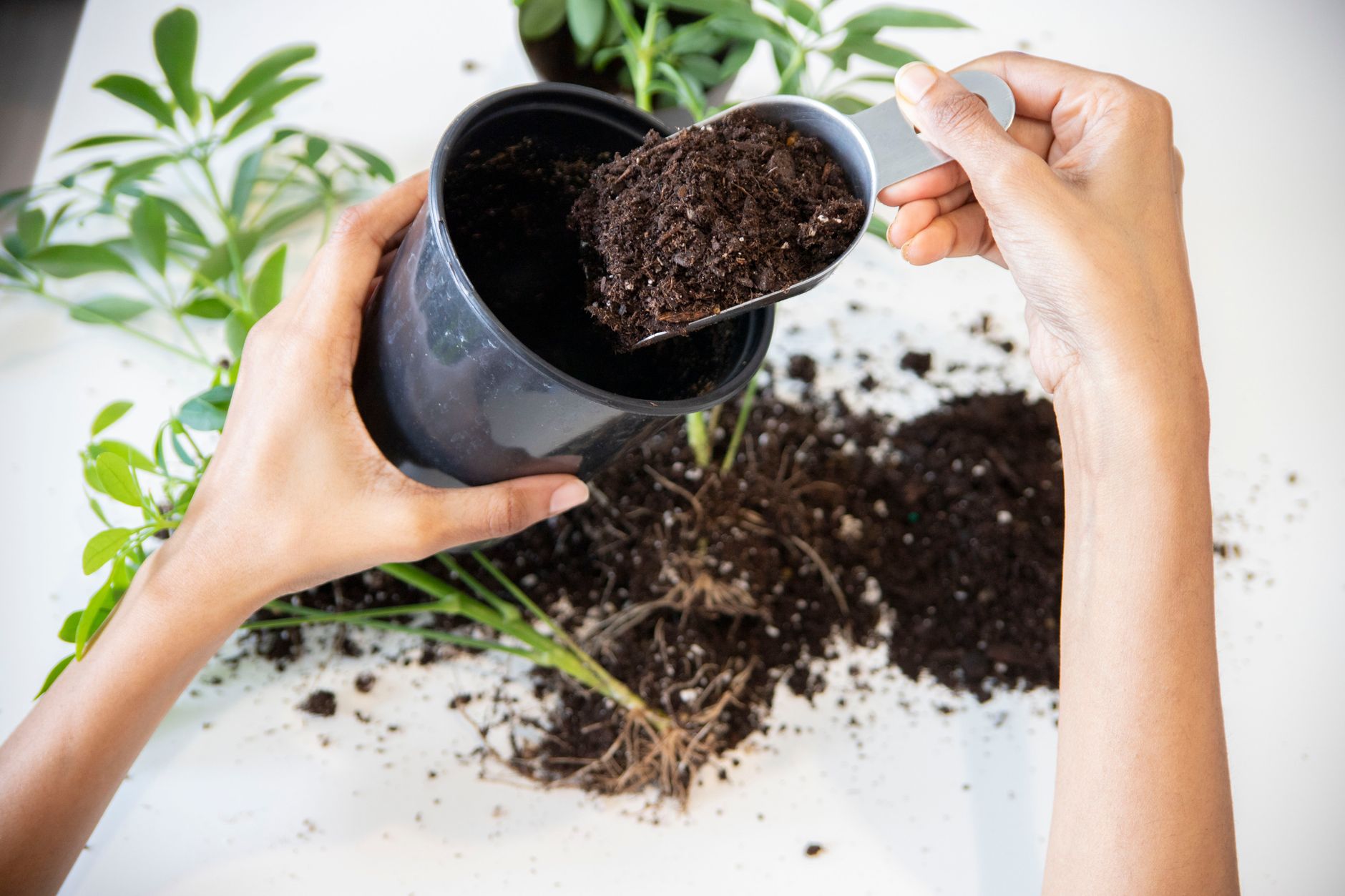
Work through a short sequence: confirm the symptom and affected part; check environment and root-zone conditions; identify the pest or disease; correct the underlying condition; choose a targeted, labelled treatment only if still needed; and monitor before adding anything else.
| Observed problem | First checks | Lower-risk first actions |
|---|---|---|
| Wilts in wet media | Drainage, pot size, root firmness | Stop unnecessary watering, drain cachepot, repot if needed |
| Soft, brown, decaying roots | Extent of root loss, stem condition | Remove dead tissue, use clean tools and media, correct moisture |
| Small dark flies from mix | Confirm fungus gnats, check moisture | Allow surface drying, use sticky traps and labelled Bti |
| White powder on leaves | Confirm powdery mildew | Improve airflow, remove affected tissue, use a labelled product |
| Brown or yellow leaf spots | Light, cold, watering, pests, disease | Stabilize care and obtain diagnosis |
| Surface mold on mix | Moisture, ventilation, organic debris | Reduce persistent wetness and remove debris |
| Tools need sanitation | Material compatibility | Clean debris, then use a labelled disinfectant |
| Healthy but slow growth | Light, season, roots, nutrition | Correct the growth-limiting factor |
A Safer Root-Rot Rescue Sequence
Handle growing conditions before any chemical:
- Confirm the medium stays wet longer than expected; check for standing water.
- Inspect roots only when justified and remove clearly dead, soft roots with clean tools.
- Repot in a clean, appropriately sized draining pot with fresh media.
- Delay fertilizer until new growth appears; discard if decay has reached the crown or stem.
Severe root disease may require diagnostic help. Do not sterilize every surviving root or reuse contaminated media.
A Fungus-Gnat IPM Plan That Covers the Full Lifecycle
Confirm the adults are fungus gnats, not fruit flies or drain flies. Then manage the full lifecycle: avoid unnecessary watering and improve drainage; use yellow sticky traps for adults; use Bti labelled for fungus-gnat larvae; inspect new plants and isolate infestations. Sticky traps alone do not control larvae, and larval treatments alone do not prevent reintroduction. Hydrogen peroxide is not the required first step.
A Leaf-Disease Plan Based on Diagnosis and Label
Photograph symptoms before treatment. Check both leaf surfaces, spot distribution, recent sun or temperature changes, watering habits, and insects. Seek diagnostic help when symptoms spread quickly, a valuable plant is involved, bacterial disease is possible, or the problem recurs. Use a fungicide only when the disease is reasonably identified and the product is labelled; fix airflow, spacing, watering timing, and sanitation too.
Use Peroxide-Based Products for Sanitation Only When the Label Supports It
Sanitation follows a defined sequence: remove soil and organic debris, wash, apply a compatible disinfectant, observe the label’s contact time, and rinse where required. Porous pots and heavily contaminated media are hard to sanitize reliably. Do not mix peroxide with bleach, vinegar, fertilizers, or other pesticides unless a label expressly permits it.
What to Do After Using Too Much Hydrogen Peroxide
If a strong mixture was applied, a drench repeated, or leaves damaged, stop and assess. Establish the bottle concentration, approximate amount, dilution, plant part exposed, exposure duration, other chemicals involved, and when symptoms began. Do not try to neutralize the peroxide with another household chemical.
Human or Pet Exposure Comes Before Plant Rescue
People and pets come first. CDC/NIOSH classifies hydrogen peroxide as an oxidizer with eye and skin hazards; follow the product label and poison-control advice. For eye or skin contact, flush with water as directed and seek guidance when appropriate; for inhalation, swallowing, or concentrated-product exposure, get professional advice. Move children and pets away from spills before dealing with the plant.
Separate Chemical Injury From the Original Plant Problem
Chemical injury may appear as rapid root discoloration, loss of root firmness, new foliar spotting, or worsening wilt despite wet media. Compare before-treatment photos, untreated tissue, and symptom timing. One yellow leaf is not proof of peroxide damage, and treatment failure is not a reason to make the next application stronger.
Stop Repeated Drenching and Correct the Root Environment
Stop all peroxide applications. Check drainage, standing water, pot size, moisture, and roots, then keep care stable. Avoid immediate fertilizer, additional pesticides, repeated unpotting, and major light changes. Judge recovery by stable roots, normal dry-down, and healthy new growth; damaged tissue may not return. Seek local diagnostic advice for valuable plants.
Store and Dispose of the Product According to Its Label
Keep peroxide in its original labelled container, away from heat, light, children, pets, and incompatible materials. Do not transfer it into a beverage bottle, store unidentified diluted mixtures, combine old and new product, or pour concentrate onto soil as disposal. Follow the label, safety data sheet, and local disposal guidance.
Conclusion
Hydrogen peroxide is not a substitute for plain water or a universal cure for root rot, fungus gnats, or leaf spots. Its chemistry is real, but dosing, timing, and plant tolerance vary too much for a one-size-fits-all internet ratio. The reliable path: diagnose the problem, correct watering and drainage, use labelled products for confirmed pests or diseases, and reserve peroxide for the uses a label supports. For most plants, the best thing to pour into a pot is clean water — at the right time, for the right plant.
FAQ
Is 3% Hydrogen Peroxide Safe to Water Plants With?
Not as a blanket statement. Three percent is an active oxidizer, not plant water. In the Phalaenopsis trial, even 3% caused minor root damage as a root dip. Use plain water for routine irrigation and a peroxide-containing horticultural product only according to its label; pharmacy sale does not equal plant safety.
What Is the Correct Hydrogen Peroxide-to-Water Ratio for Plants?
There is no universal ratio. The answer depends on bottle concentration, final concentration, plant, target problem, application method, contact time, and frequency. This article does not recommend diluting 12%–35% concentrate for household plants. Common 1:4 and 1:2 formulas are internet conventions, not universal Extension standards; follow a labelled product instead.
Does Hydrogen Peroxide Cure Root Rot?
Not by itself. Root-rot management requires correct diagnosis, reduced excess moisture, suitable drainage, removal of dead roots, and clean media and tools. Direct peroxide root dips can damage living roots, as the Phalaenopsis trial showed; severely rotted plants may need to be discarded.
Does Hydrogen Peroxide Kill Fungus Gnats?
Household evidence is inconsistent, and authoritative IPM guidance prioritizes other measures. Fizzing does not prove larval mortality. Correct moisture, improve drainage, use yellow sticky traps, and use labelled Bti for larvae; manage the full lifecycle instead of expecting drenches to end an infestation.
Sources
The guidance in this article draws on the following source categories:
- CDC/NIOSH hydrogen-peroxide safety guidance
- U.S. EPA pesticide-label guidance
- Phalaenopsis root-dip phytotoxicity trial
- University Extension root-rot and IPM guidance
- USDA nasturtium soil-amendment research
- Peer-reviewed plant hydrogen-peroxide signalling research
- 2026 watermelon soil-microbiome study
- Specialized hydrogen-peroxide crop and production studies
You Might Also Like