15 Yellow-Flowering Trees: How to Identify and Choose the Right One
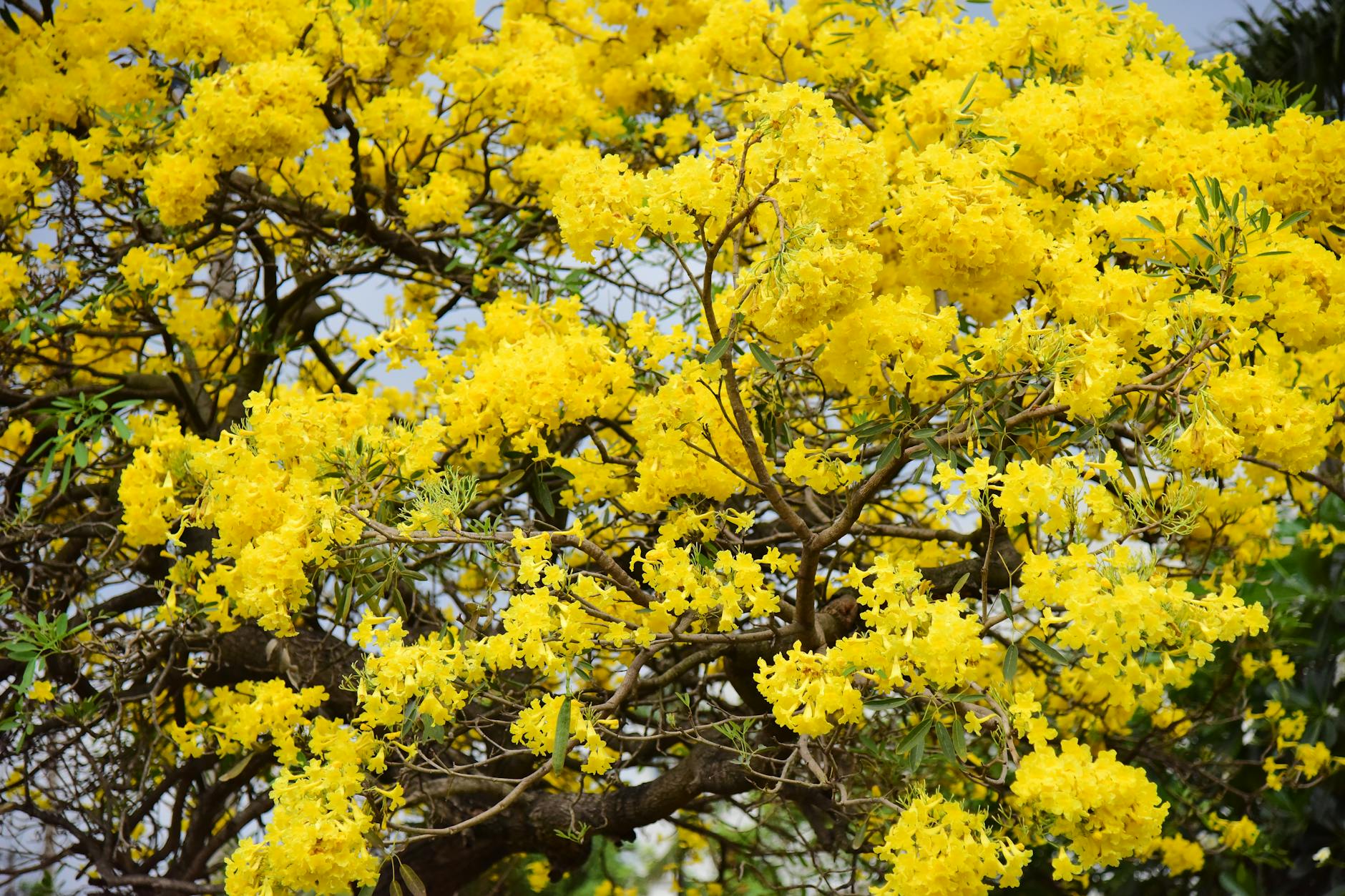
Yellow-flowering trees catch the eye, but telling species apart takes a few clues. Bloom timing, flower shape, scent, and region all matter. This guide covers how to identify them, presents 15 options for different climates, and shares practical planting advice—including maintenance needs, pet safety, and bloom calendar.
Key Takeaways
- Identify by bloom timing and region: Most yellow-flowering trees look alike from a distance. Check whether flowers appear before or after leaves, note scent and flower shape, and factor in your climate — location alone can rule out half the possibilities.
- Match the tree to your climate: The 15 species in this guide are grouped for warm humid, temperate, and dry arid climates. Choosing a tree suited to your zone saves maintenance headaches and ensures reliable blooms each season.
- Check pet toxicity before planting: Laburnum and yellow oleander are highly toxic to dogs and cats. Tabebuia, palo verde, and yellow bird of paradise have low to no reported toxicity, making them safer choices for pet owners.
- Avoid invasive surprises: Golden rain tree self-seeds aggressively in parts of the Southeast, and sweet acacia can naturalize in warm climates. Cornelian cherry dogwood and Kentucky coffeetree are well-behaved natives for temperate gardens.
- Plan color with the bloom calendar: February–March bloomers like Cornelian cherry dogwood flower on bare branches, while June–July bloomers like golden rain tree flower in full leaf. Repeat bloomers like yellow elder extend the color into fall.
How to Identify Yellow-Flowering Trees
Look at Bloom Timing and Leaf Presence
Some trees bloom early on bare branches; others flower after leaves fully emerge. Cornelian cherry dogwood and certain tabebuias produce clusters before any leaves appear, creating a striking silhouette. Golden rain tree flowers in summer on full trees, with leaves already providing a green backdrop. Timing also varies by region: a tree that blooms in March in Florida may not flower until May in cooler zones.
Check the Scent and Flower Shape
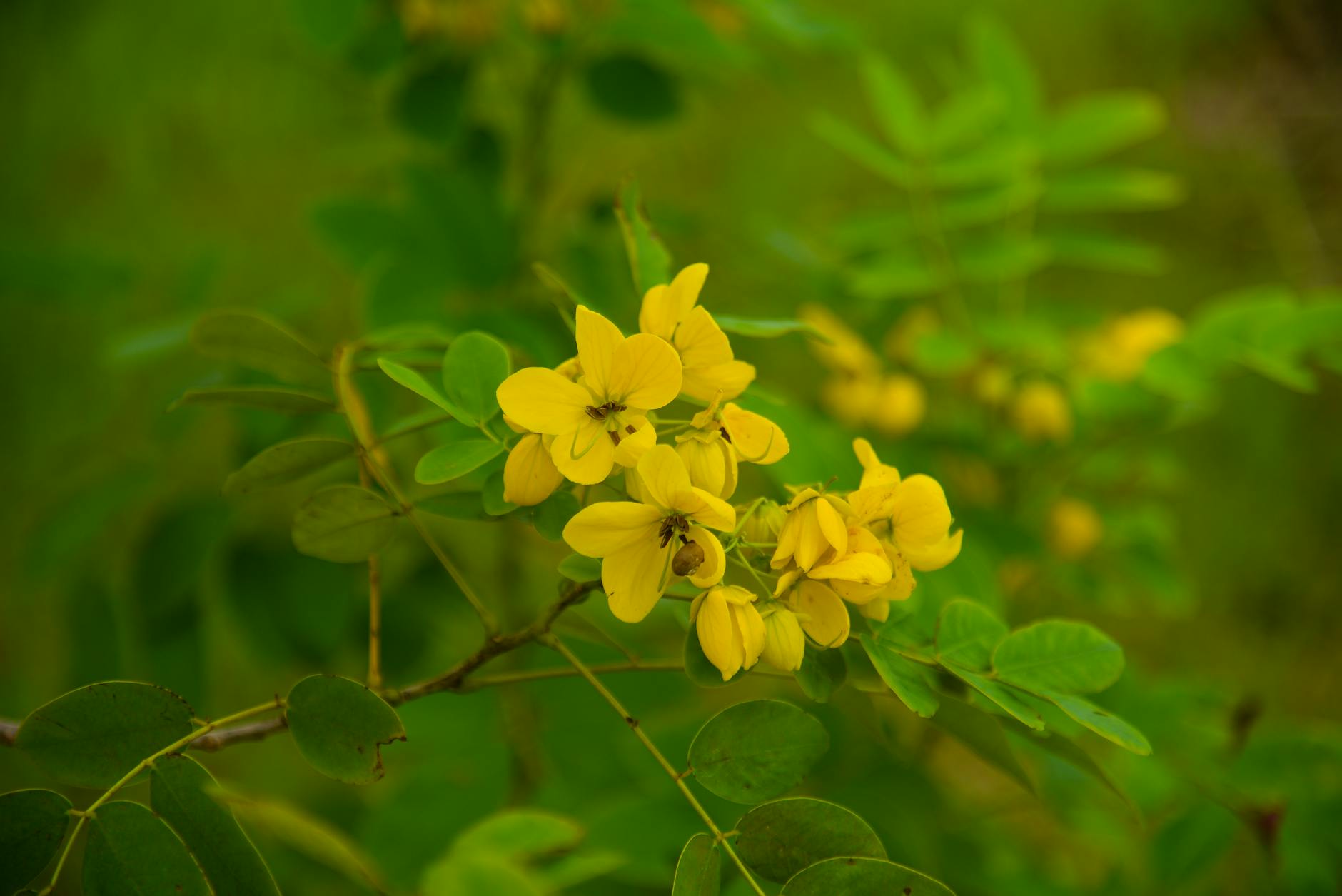
Sweet acacia and golden chain tree are fragrant—sweet acacia has a powdery honey scent, while golden chain smells mildly sweet. Golden rain tree is nearly odorless. Flower shape is a strong identifier: laburnum has drooping racemes like yellow wisteria, often 8–10 inches long; palo verde has five-petaled blooms that cover the green bark; tabebuia has trumpet-shaped clusters that open before leaves and resemble small orchids. Pay attention to petal count and arrangement—cassia flowers have five petals with stamens that curl.
Note Your Region and Growing Conditions
Warm humid regions favor cassia, tabebuia, and yellow oleander—these trees thrive in high rainfall and mild winters. Temperate zones host laburnum, golden rain tree, and Cornelian cherry dogwood, which need a cold period for dormancy. Dry desert areas suit palo verde, acacia, and yellow bird of paradise, all adapted to low water and intense sun. Using regional guides like the USDA Plant Hardiness Zone Map narrows options quickly.
Yellow-Flowering Trees That Are Commonly Confused
Golden Chain vs Golden Rain Tree – Golden chain (Laburnum anagyroides) has long drooping racemes, zones 5–7. Golden rain (Koelreuteria paniculata) has upright panicles, zones 5–9, with papery seed pods that look like Chinese lanterns.
Golden Shower Tree vs Yellow Tabebuia – Golden shower (Cassia fistula) has hanging racemes up to 2 feet long; tabebuia has trumpet-shaped clusters that appear before leaves, often covering the entire canopy.
Forsythia vs Yellow-Flowering Trees – Forsythia is a shrub, not a tree, with small four-petaled flowers on bare twigs. If it has multiple stems from the ground and no central trunk, it’s likely forsythia.
Key differences at a glance
- Laburnum: drooping racemes, temperate, May–June
- Koelreuteria: upright panicles, warm temperate, June–July
- Cassia fistula: hanging racemes, tropical, late spring
- Tabebuia: trumpet-shaped clusters, tropical, before leaves
- Forsythia: shrub, four-petaled, early spring
15 Yellow-Flowering Trees for Different Climates and Garden Sizes
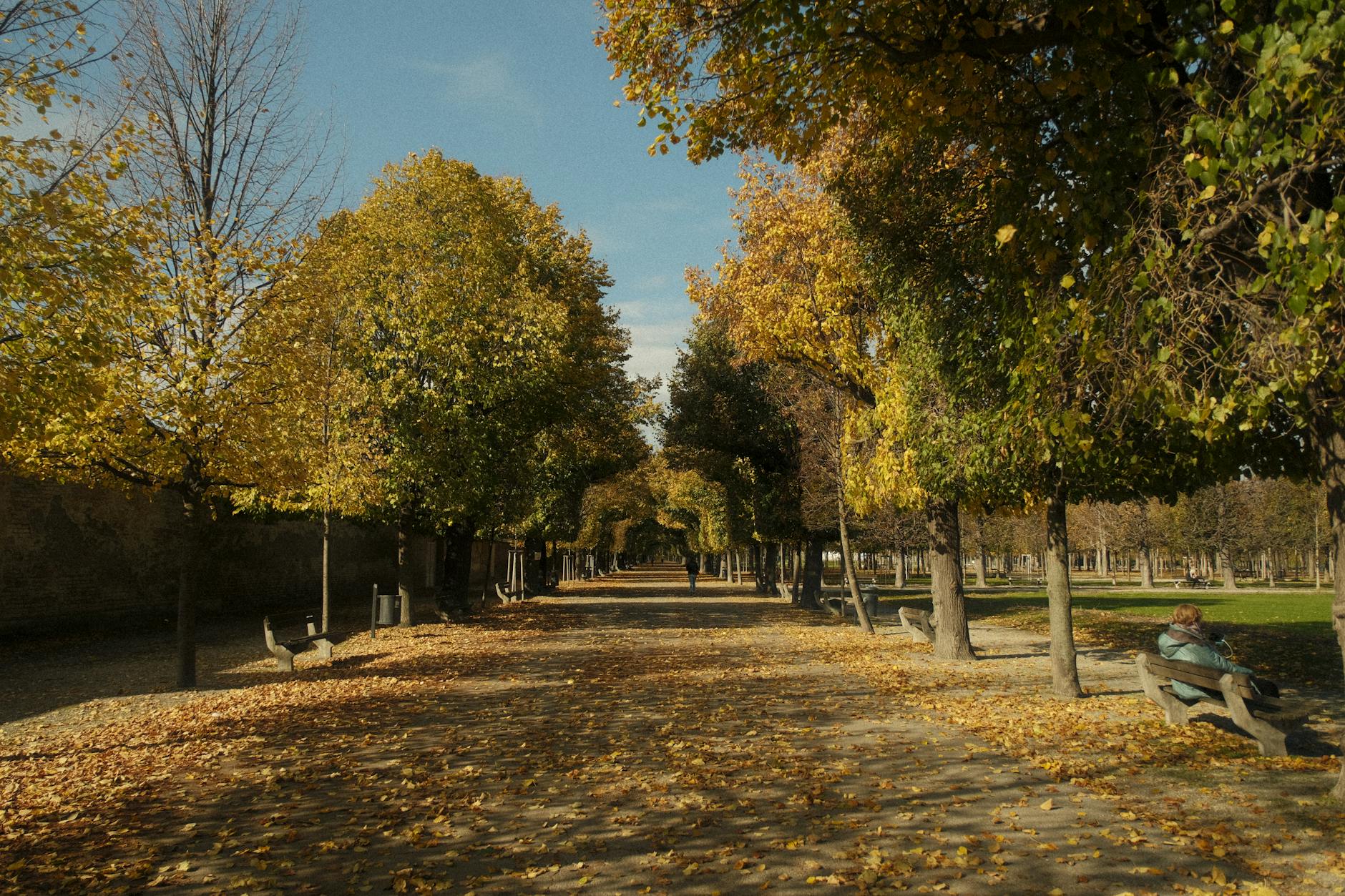
Each entry includes USDA zone, mature size, bloom season, maintenance level, native/introduced status, and landscape use. Descriptions help you choose based on flower type, growth habit, and seasonal interest.
5 Yellow-Flowering Trees for Warm and Humid Climates
Golden Shower Tree (Cassia fistula) Zones 9–11, 30–50 ft tall × 30–40 ft. Blooms late spring with hanging racemes of bright yellow flowers. Moderate maintenance. Introduced from South Asia. Large shade tree with a spreading canopy. Flowers are showy but last only a few weeks; seed pods are long and messy.
Yellow Tabebuia / Golden Trumpet Tree (Tabebuia spp.) Zones 9–11, 20–30 ft × 15–25 ft. Blooms before leaves in late winter, covering bare branches with trumpet-shaped golden flowers. Low–moderate maintenance. Native to South America. Excellent street or lawn tree because it stays relatively clean and blooms reliably each year.
Yellow Elder (Tecoma stans) Zones 8–11, 10–20 ft × 8–15 ft. Blooms spring–fall repeatedly in waves, with clusters of bell-shaped yellow flowers. Low maintenance, drought-tolerant after establishment. Native to American tropics. Great for small gardens, hedges, or containers. Attracts butterflies and hummingbirds.
Yellow Oleander (Cascabela thevetia) Zones 9–11, 8–15 ft × 6–10 ft. Blooms spring–fall with funnel-shaped yellow flowers. Low maintenance but highly toxic to humans and pets—all parts contain cardiac glycosides. Introduced from tropical America. Ornamental shrub for coastal areas, but avoid where children or animals play.
Tipu Tree (Tipuana tipu) Zones 9–11, 30–50 ft × 20–40 ft. Blooms late spring with orange-yellow clusters of pea-like flowers. Moderate maintenance, messy fruit that drops winged pods. Introduced from South America. Best for large landscapes where seed drop isn’t a concern. Fast-growing but can be brittle in storms.
5 Yellow-Flowering Trees for Temperate Climates
Golden Chain Tree (Laburnum anagyroides) Zones 5–7, 15–25 ft × 10–15 ft. Blooms May–June with pendulous racemes up to 12 inches long. Moderate maintenance—prune to shape after flowering. Introduced from Europe. All parts toxic, especially seeds. Stunning specimen tree for small gardens but must be kept away from pets and children.
Golden Rain Tree (Koelreuteria paniculata) Zones 5–9, 30–40 ft × 30–35 ft. Blooms June–July with upright yellow panicles. Low–moderate maintenance. Introduced from Asia; can self-seed aggressively in the Southeast. Good shade tree with papery seed pods that turn pinkish-brown. Tolerates pollution and poor soil.
Cornelian Cherry Dogwood (Cornus mas) Zones 4–8, 15–20 ft × 12–15 ft. Blooms early spring on bare branches with small yellow clusters. Low maintenance, extremely reliable. Non-invasive, native to Europe but well-behaved in North America. Excellent for early color; red edible fruit appears in summer. Good under utility lines.
Forsythia Tree Form (Forsythia spp. trained as standard) Zones 5–8, 6–10 ft × 4–6 ft. Blooms early spring with bright yellow four-petaled flowers. Low maintenance. Not a true tree—trained as a standard on a single stem. Small garden focal point, but short-lived as a tree form. Best replaced every 5–7 years.
Kentucky Coffeetree (Gymnocladus dioicus) Zones 4–8, 50–70 ft × 40–50 ft. Blooms June–July with greenish-yellow panicles. Low maintenance, very tough. Native to North America, well-behaved. Large shade tree with coarse bark and bipinnate leaves. Seeds need scarification to germinate, so it rarely becomes invasive. Great for urban landscapes.
5 Yellow-Flowering Trees for Dry and Arid Climates
Palo Verde (Parkinsonia spp.) Zones 8–11, 20–30 ft × 20–30 ft. Blooms April–May covering green bark with five-petaled golden flowers. Low maintenance, extremely drought-tolerant. Native to Southwest. Provides light shade; green bark does photosynthesis. Good for xeriscapes.
Acacia baileyana (Cootamundra Wattle) Zones 8–10, 15–20 ft × 18–25 ft. Blooms late winter–early spring with fluffy yellow ball-shaped flowers. Low maintenance. Introduced from Australia; can be weedy in some areas. Silvery-gray foliage adds year-round interest. Best in well-drained soil.
Desert Museum Palo Verde (Parkinsonia ‘Desert Museum’) Zones 8–11, 20–25 ft × 20–25 ft. Blooms April–May with profuse golden flowers covering the tree. Low maintenance. Hybrid, non-invasive, thornless. Ideal for xeriscapes—no messy pods or thorns. Blooms longer than other palo verdes.
Yellow Bird of Paradise (Caesalpinia gilliesii) Zones 8–11, 6–10 ft × 6–8 ft. Blooms summer–fall with red and yellow flowers on erect spikes. Low maintenance. Self-seeds but not aggressively. Great for hot corners; attracts bees. Leaves are fern-like. Can be pruned to shape.
Sweet Acacia (Acacia farnesiana) Zones 9–11, 10–20 ft × 10–15 ft. Blooms intermittently spring–fall with fragrant yellow puffballs. Low maintenance. Can be aggressive in warm climates—self-seeds readily. Good for screening or as a fragrant accent near patios. Thorny, so place away from walkways.
What to Know Before Planting a Yellow-Flowering Tree
Messiness and Maintenance: Which Trees Are Low-Fuss?
Golden rain tree and golden shower tree drop seed pods and leaves, requiring regular raking. Tabebuia and palo verde are relatively clean—tabebuia drops only short-lived flowers, and palo verde has small seed pods. Cornelian cherry dogwood is very low-mess, with small fruit that birds eat quickly. For minimal cleanup, choose trees without heavy fruit, large pods, or persistent seed heads. Also consider branch strength: tipu tree can drop limbs in storms, while Kentucky coffeetree is sturdy.
Pet Toxicity: Are Yellow-Flowering Trees Safe for Dogs and Cats?
Laburnum contains cytisine, toxic to pets if ingested—symptoms include vomiting and seizures. Yellow oleander is extremely toxic—even a few leaves can be fatal. Sweet acacia and golden shower tree are generally non-toxic but can cause mild stomach upset if consumed in quantity. Avoid laburnum, yellow oleander, and golden chain if your pets chew on plants. Safe choices: tabebuia, palo verde, yellow bird of paradise, and Cornelian cherry dogwood (fruit is edible for humans but not toxic to pets). Always check with ASPCA or a veterinarian before planting.
Native vs. Invasive: Choosing a Well-Behaved Tree for Your Region
Golden rain tree self-seeds aggressively in the Southeast, especially in disturbed areas. Sweet acacia naturalizes in warm climates and can form thickets. Laburnum can naturalize in cool, moist regions. Native and well-behaved options: Cornelian cherry dogwood (native to Europe but non-invasive in North America), Kentucky coffeetree (native to Midwest), palo verde species (native to Southwest). Check with your local extension office to see if a species is listed as invasive in your area before planting.
Which Yellow-Flowering Tree Is Right for Your Yard?
- Small yards: Yellow elder, Cornelian cherry dogwood, forsythia tree form, yellow bird of paradise.
- Large shade trees: Kentucky coffeetree, golden rain tree, tipu tree, palo verde.
- Florida/tropical: Golden shower tree, yellow tabebuia, yellow elder, tipu tree.
- Dry landscapes: Palo verde, Desert Museum palo verde, sweet acacia, Acacia baileyana.
- Low maintenance: Cornelian cherry dogwood, tabebuia, palo verde, yellow bird of paradise, Kentucky coffeetree.
A Seasonal Bloom Calendar for Yellow-Flowering Trees
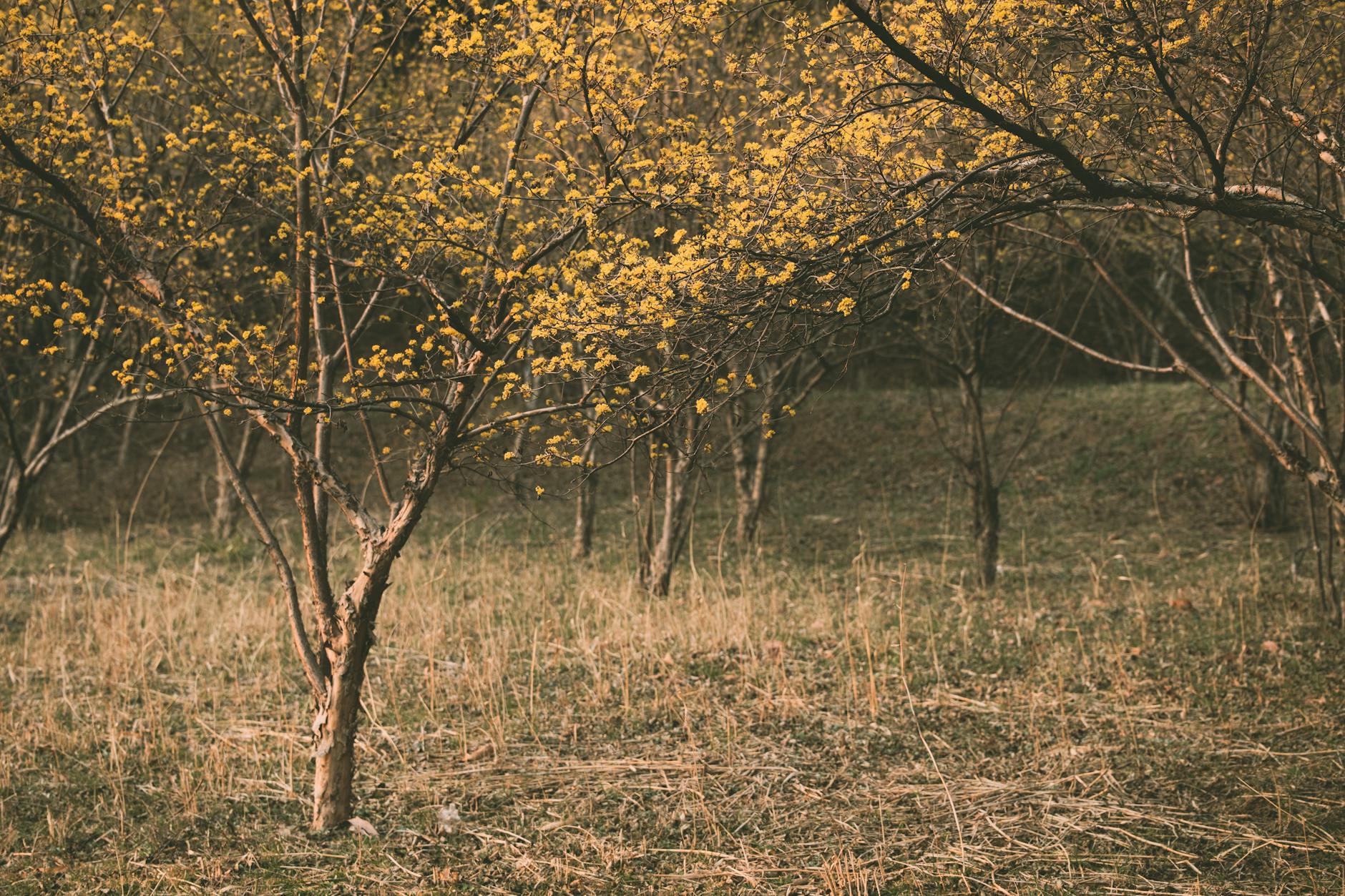
February–March Bloomers
Cornelian cherry dogwood produces small yellow clusters that last 2–3 weeks. Yellow tabebuia covers bare branches with large trumpets, often the first major color in Florida gardens. Palo verde starts blooming in March in desert areas, with flowers covering the green bark so densely the tree looks solid gold.
April–May Bloomers
Golden chain tree (May) hangs long racemes for 2–3 weeks. Golden shower tree (late spring) produces 12–24 inch hanging racemes. Yellow elder has its first heavy flush in April, then repeats through fall. Desert Museum palo verde peaks in April.
June–July Bloomers
Golden rain tree (upright panicles) blooms through July and then sets papery pods that last into fall. Kentucky coffeetree (greenish-yellow flowers) is subtle but adds texture. Yellow bird of paradise begins blooming in June and continues until frost in warm climates.
August–October Bloomers
Yellow oleander and yellow elder repeat bloom into fall, especially if pruned after summer. Temperate yellow trees like laburnum and Cornelian cherry rarely flower this late. Sweet acacia can produce sporadic blooms after summer rains.
Conclusion
Identifying a yellow-flowering tree relies on bloom timing, leaf presence, scent, and region. Match your tree to climate and yard size, and consider maintenance, pet safety, and invasive potential before planting. With the right choice—whether a desert palo verde or a temperate Cornelian cherry dogwood—you’ll enjoy years of cheerful color with minimal headaches.
FAQ
What is the tree with yellow flowers that blooms in early spring with no leaves?
Several: Cornelian cherry dogwood (small clusters in zones 4–8), yellow tabebuia (large trumpets in warm climates), and palo verde (desert, starts March). Laburnum blooms later in May with leaves already emerging.
Are yellow-flowering trees messy to maintain?
Some are, some aren’t. Golden rain tree and golden shower tree drop pods and leaves. Tabebuia and palo verde are clean. Cornelian cherry dogwood is very low-mess. Kentucky coffeetree drops large pods but they are not sticky or messy.
What are the yellow trees blooming now in Florida?
Common: yellow tabebuia (Feb–Mar), yellow elder (spring–fall), golden shower tree (late spring), and tipu tree (late spring–summer). Check local extension for exact timing.
What is the name of the tree with yellow hanging flowers like golden rain?
That usually fits golden chain tree (Laburnum) with long pendulous racemes. Golden shower tree (Cassia fistula) also has hanging racemes but is tropical. The name “golden rain” often refers to Koelreuteria, whose flowers are upright, not hanging.
Did you find this post helpful?
A little support goes a long way in helping me create more free, in-depth content like this.